The green edge of an abandoned room
The most alarming growth is often the one that has already become ordinary. A root lifts a paving stone for years before somebody falls. A cellar bloom feeds quietly on damp insulation. A useful dye plant escapes its beds and closes a drainage ditch. None requires malice; neglect provides enough assistance.
Trade speech calls many unrelated organisms plants. Field workers distinguish rooted vascular growths, spore-bearing fungi, mats of small organisms and engineered crop strains. The distinctions matter when a cleaner can remove the visible surface while leaving the structure alive inside a wall.
A practical botanical register
| Trade name | Local ecology | Useful property | Cost or hazard |
|---|---|---|---|
| River ash | Rauth wet valleys; supports sailmoth larvae | Timber, shade and bank stabilisation | Crowded diseased stands shed heavy limbs |
| Wire reed | Sedge marsh edge; dense rhizome beds | Matting and erosion control | Cuts exposed skin; closes neglected channels |
| Lantern cap | Damp deadwood; luminous fungal fruiting bodies | Local dye and research cultures | Look-alike species make casual foraging unsafe |
| Widow lace | Shaded derelict masonry; climbing adhesive growth | Resin in controlled cultivation | Fine hooked filaments trap small animals and foul machinery |
| Cinder moss | Acidic mineral spoil; tolerant surface mats | Stabilises dust where established | Concentrates some metals; unsuitable animal bedding |
| Bell-throat vine | Warm Edravan forest margins; insect-trapping cups | Digestive compounds studied by apothecaries | Irritant sap and attractive but unsafe trapped liquid |
| Saltglass herb | Selnic saline margins; salt-tolerant succulent | Seed oil from selected cultivated strains | Wild accumulations vary; edible appearance is not clearance |
| Black seam | Wet insulation and cellulose composites; hidden fungal colony | No established household use | Structural decay, irritating spores and persistent reinfestation |
Widow lace
Widow lace begins as dark threads along a damp joint. Mature growth produces pale hanging filaments that catch insects, litter and the feathers of small birds. Its common name owes something to the appearance of veils over a doorway and something to the marketing instincts of people paid to remove it.
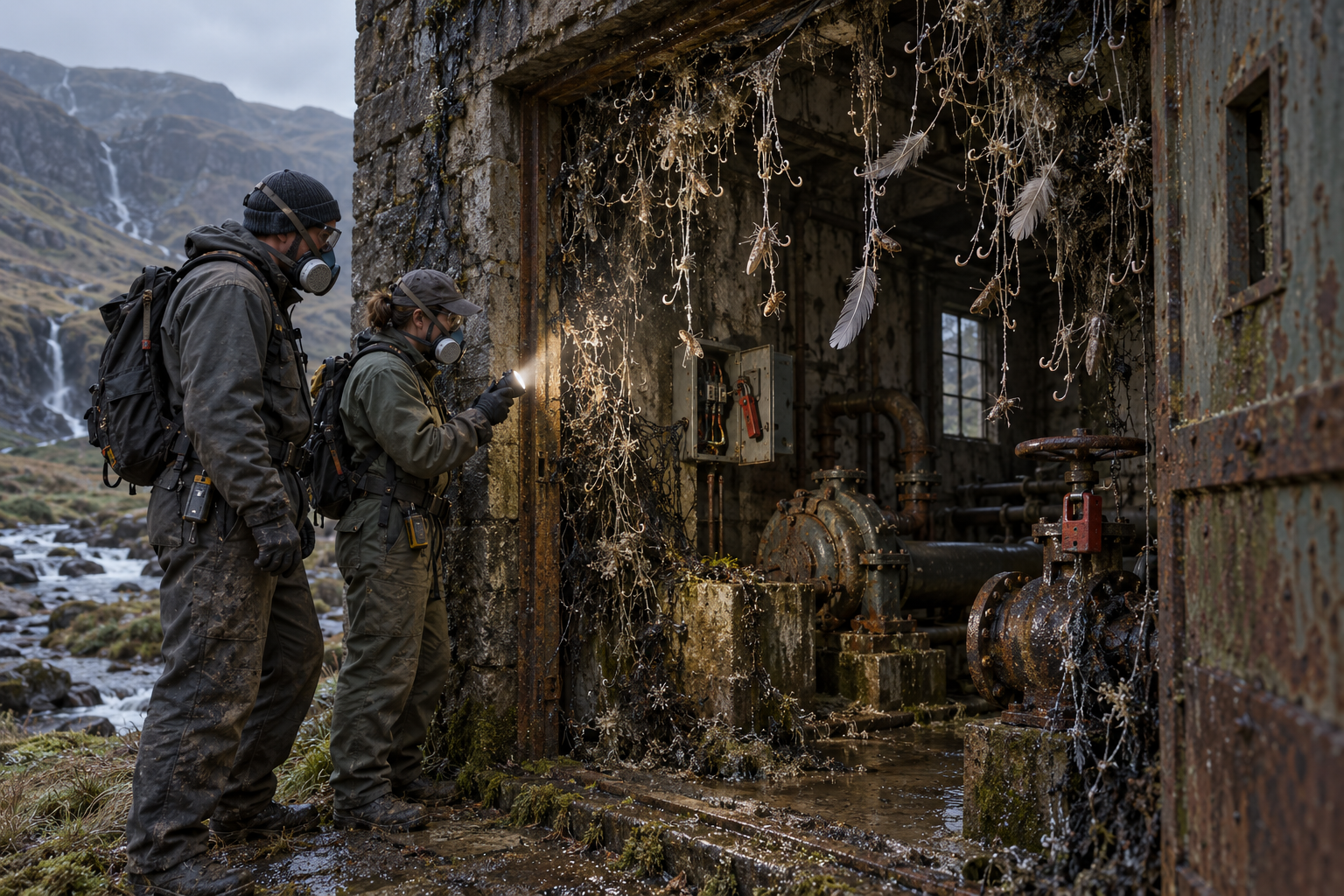
A neglected pump house offers water, shelter and surfaces through which the growth can spread. Pulling down the visible curtain does not establish that the joints are clear. Maintenance crews isolate the machinery, inspect the hidden growth and deal with the source of damp before reopening the room. Landlords who pay only for the curtain commonly need another curtain removed.
The resin has legitimate uses in local binding compounds when cultivated and processed by people who understand the strain. This creates an awkward trade: the organism a town wants removed can be a crop another household depends upon. A blanket eradication order can therefore produce both good public works and clandestine gardens.
Black seam and sealed habitation
Black seam grows inside damp composite walls and insulation. Early signs include persistent mustiness, stained joints and material that softens beneath a sound-looking outer layer. Its spores irritate lungs, but species and exposure differ; neither the colour nor the name is a diagnosis.
In an open settlement, repairs require dry space and replacement material. In a pressure settlement, opening the affected panel may also disturb a life-support boundary. Nereth’s inspectors mark structural and biological concerns separately. The cheapest contractor sometimes certifies that the fungus is dead without certifying that the wall can still hold the room.
Households need somewhere to live during remediation. Without that provision, residents conceal infestations because a truthful report can evict them faster than the growth. Housing policy and biological surveillance become the same problem at the tenant’s door.
Crops, seed ownership and failed harvests
Selected strains make salt margins, short summers and enclosed farms productive. They also create dependencies: replacement stock, tested cultures, spare lamps, nutrient inputs and knowledge held by a small number of suppliers. A seed packet cannot reproduce the entire system that made its demonstration plot successful.
Selnic’s seed refuges and Asterfall’s collections preserve diversity for different purposes. Public collections can be underfunded while private catalogues prosper; private breeders can also perform valuable work that a ministry never financed. The useful questions concern access, evidence, payment and what happens when a supplier disappears.
Crop failure rarely stays in the field. It reaches rents, school attendance, migration, theft and the number of animals a household can keep through winter. A harvest festival held after a poor year may be smaller, angrier and more necessary than the grand one in the official painting.
Gathering and arcane materials
Some spell workings require particular resins, mineral-fed lichens or fresh structures from a narrow season. The requirement concerns the material’s properties, not a universal rule that every spell consumes something rare. A practitioner may need permission from a community maintaining the habitat and instruction from somebody whose family has gathered there for generations.
A valuable reagent changes the politics of a quiet place. Outsiders can overharvest, a chief can enclose customary ground, or a cooperative can negotiate a contract that pays for stewardship. The adventure of finding a material continues after it is found: keeping it viable, transporting it and explaining why the buyer’s label differs from the gatherer’s name.